
Planning an outdoor kitchen means lots of decisions. Things like choosing a grill, finding the right countertop, adding storage, and deciding whether there’s room for extras like a refrigerator, sink, pizza oven, or bar. But before you start working on the details and finishes, you need to plan the shape, size, and shade options for your outdoor kitchen.
Shade is much easier to incorporate while you’re designing an outdoor kitchen than it is to add after everything has been installed. The right shade solution can make cooking more comfortable, create a better place for guests to gather, and help turn your outdoor kitchen into a space you can enjoy throughout more of the year.
Location, Location, Location
Before deciding on the best location for your outdoor kitchen, spend some time observing how sunlight moves across your patio or backyard.
Pay particular attention to the hours when you expect to use the kitchen most. A location that feels comfortable at noon may receive intense direct sunlight at 5 PM, just when you’re ready to start preparing dinner. West-facing spaces can be especially challenging because of low afternoon and evening sun.
Seasonal changes matter, too. The sun’s position changes throughout the year, which means the amount and angle of sunlight reaching your outdoor kitchen will vary as well.
Understanding these patterns can help you determine the best location for your outdoor kitchen and how much shade you’ll need to keep it comfortable.
Decide Which Areas Need the Most Shade
A smart shade for your outdoor kitchen will make cooking more comfortable and help protect food and food-prep areas. Direct sunlight can make working at a countertop uncomfortable, particularly during the hottest part of the day. Shade can also reduce glare on countertops and other surfaces. Adding shade over food prep and grilling areas can help cooks stay comfortable and keep food cooler.
Don’t forget about your guests. If your outdoor kitchen includes an island with stools, a dining table, or an adjacent conversation area, those spaces may need even more shade than the cooking area. Guests could be sitting there for several hours during a cookout or family gathering.
Cooking areas require additional consideration. Grills, smokers, pizza ovens, and other heat-producing appliances have specific requirements for clearance and ventilation.
When deciding which shade structures to install over cooking areas, consider heat, smoke, and airflow. Always follow appliance manufacturers’ clearance requirements when determining where to locate cooking equipment and shade structures.
A Pergola Can Define An Outdoor Kitchen
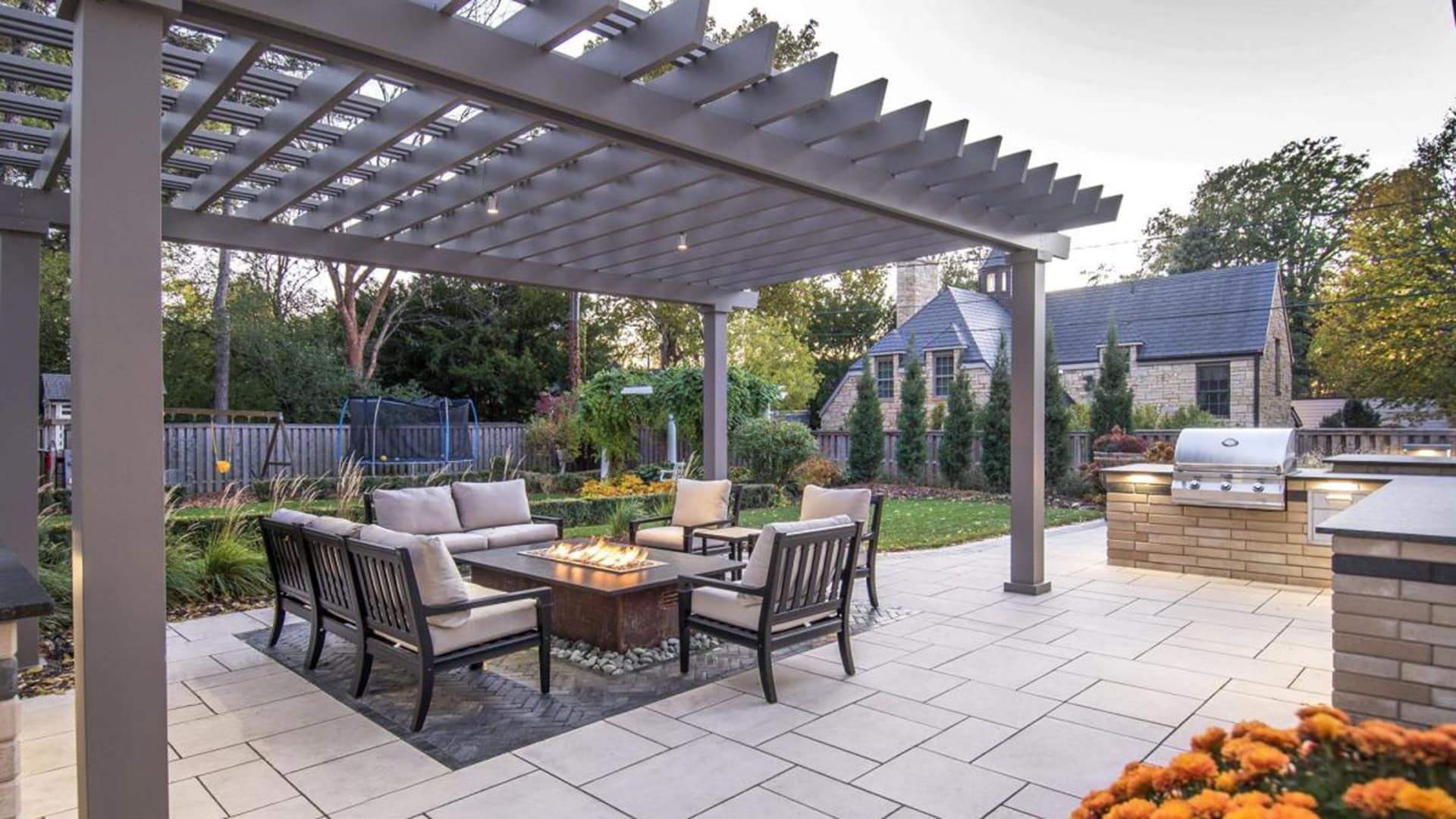
A pergola provides shade and establishes your outdoor kitchen as a defined destination in the backyard.
Adding a pergola to larger patios creates separate cooking, eating, and lounging zones by visually separating the space. Positioning a pergola over the outdoor kitchen or adjacent dining space can make the area feel more like an outdoor room while maintaining the patio’s open-air character.
Depending on the design, pergolas can create partial shade on their own or be paired with additional shade solutions for greater coverage.
When incorporating a pergola into a new outdoor kitchen, consider the placement of posts and footings early. You don’t want a structural post blocking a cabinet door, interrupting a walkway, or taking up valuable space beside the grill.
A Retractable Canopy Provides Flexible Shade
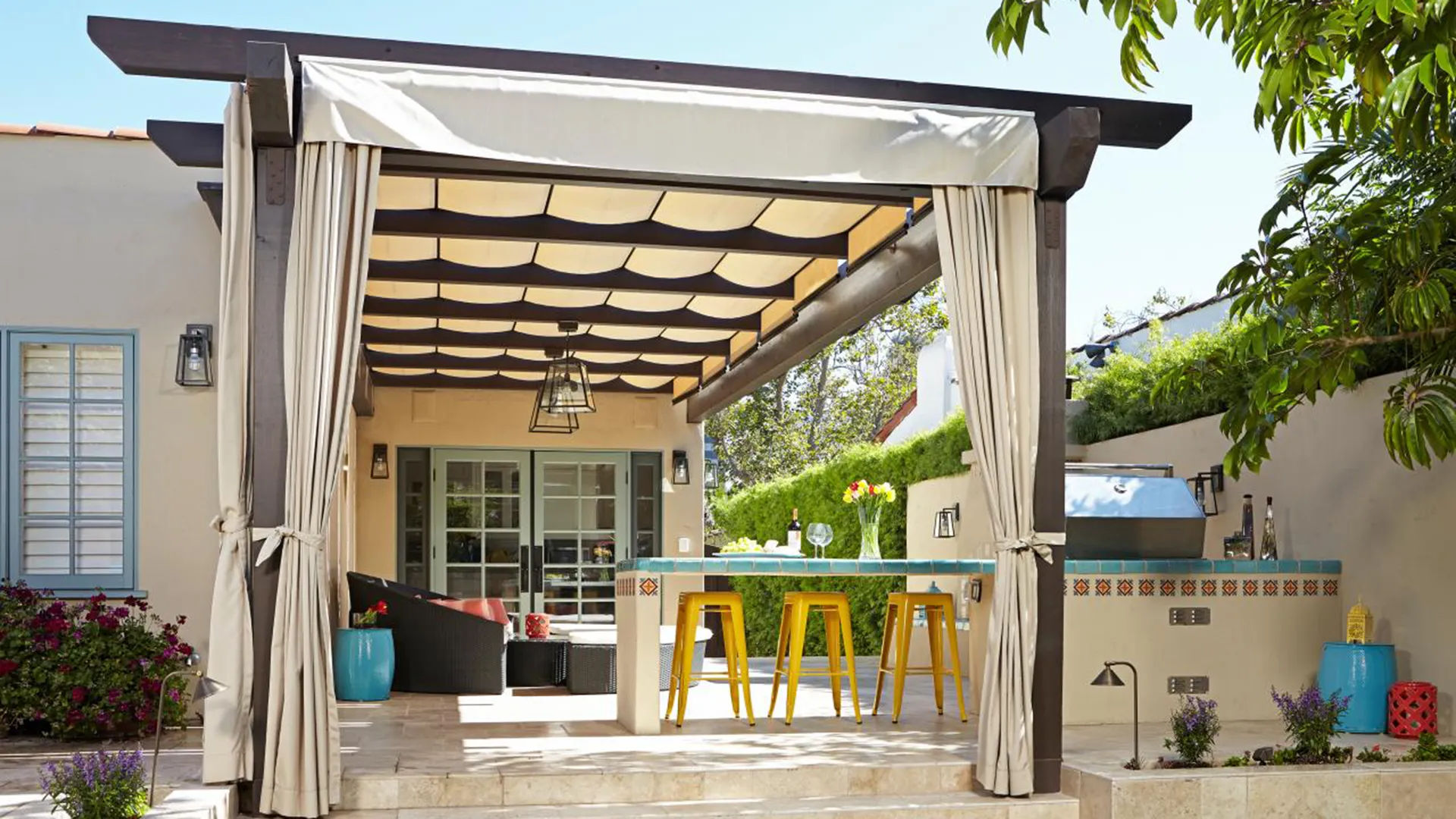
Retractable canopies allow you to adjust coverage based on the weather, season, and time of day. Extend the canopy when the afternoon sun becomes uncomfortable and retract it when you want more sunlight or a completely open view overhead.
A retractable canopy can be incorporated into a pergola or other compatible outdoor structure, making it both an architectural feature and a functional source of adjustable shade.
Fixed Coverage Is Best For Consistent Shade
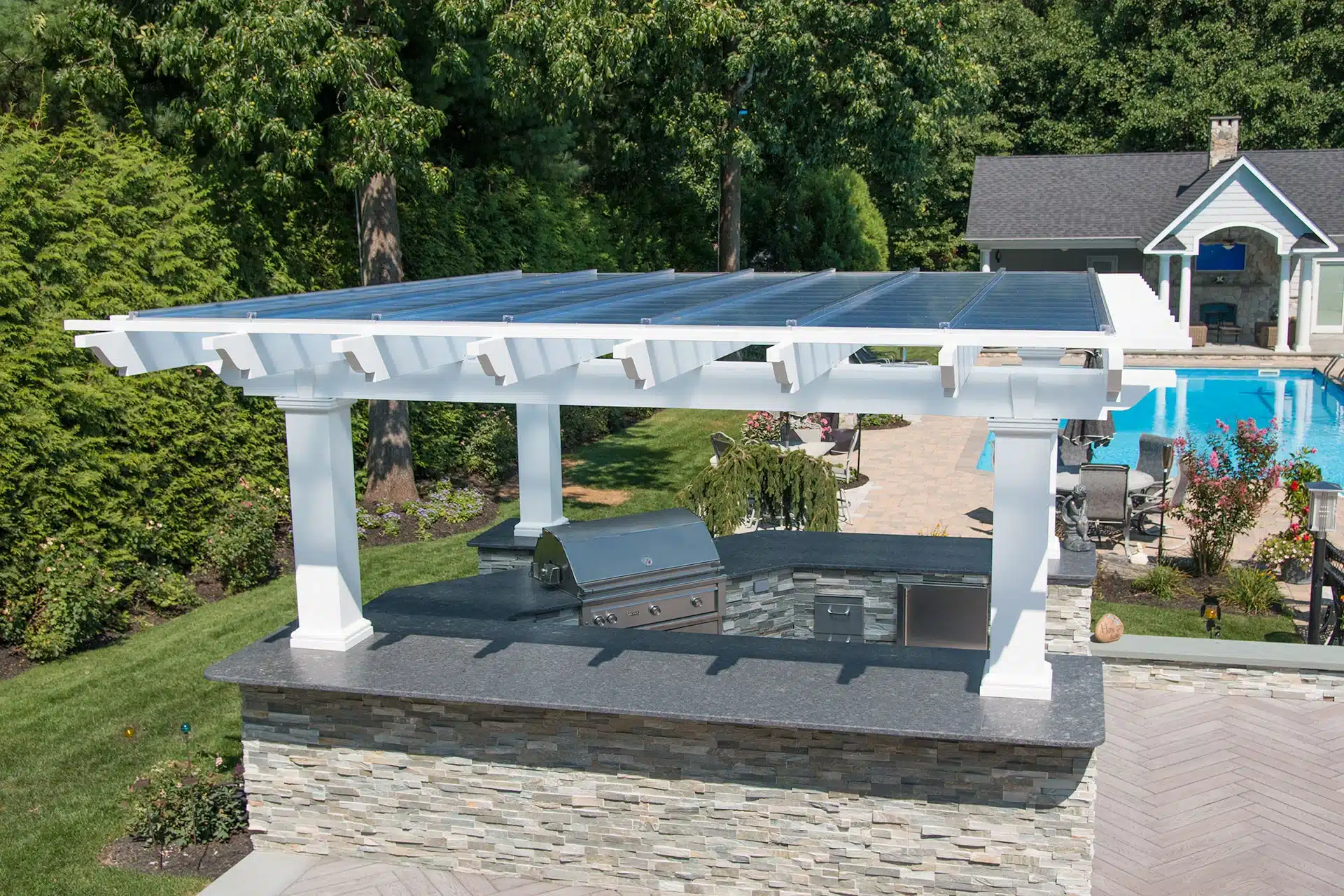
If your patio space gets direct sun most of the time, a fixed patio canopy is a great shade solution. Consistent overhead coverage can create the feeling of an outdoor room and make the kitchen more comfortable during sunny weather. Depending on the structure and design, it may also provide some protection from light rain.
However, because these structures are permanent, they require careful planning. Consider drainage, ventilation, utilities, lighting, appliance clearances, and local building requirements before installation.
Don’t Forget About Low-Angle Sun
Overhead shade doesn’t always provide enough coverage to keep an outdoor kitchen cool. Morning and late-afternoon sunlight can enter an outdoor kitchen from the side, passing underneath a pergola, canopy, or roof. If your patio receives strong western sun, this can become particularly noticeable around dinner time.
Look at the direction your outdoor kitchen faces and consider whether you need additional protection along one side. Depending on the design, privacy panels, screens, landscaping, or strategically positioned shade features can help reduce exposure to low-angle sunlight.
Thinking about both overhead and lateral sun exposure can create more effective coverage than simply placing a canopy over the kitchen.
Coordinate Shade With Your Kitchen Layout
Your shade structure should work with the outdoor kitchen rather than compete with it. As you develop your outdoor kitchen plans, consider where structural posts, cabinets, countertops, appliances, seating, and walkways will be located. Make sure people can move comfortably between the grill, preparation areas, dining spaces, and the house without encountering unnecessary obstacles.
This is also the time to think about features you may want to incorporate into the shade structure. Lighting can make the kitchen easier to use after sunset, while electrical connections may be needed for other outdoor features.
Use Shade to Connect Cooking and Entertaining Areas
An outdoor kitchen is part of your overall outdoor dining and entertaining spaces. You can use shade structures to connect cooking and entertaining areas, creating a cohesive outdoor space design.
For example, a pergola or canopy could cover both a preparation counter and nearby seating, creating one cohesive entertaining zone. In a larger backyard, separate shade areas could distinguish the kitchen from a dining or lounge area while still creating a coordinated design.
Materials, proportions, and architectural lines can also be chosen to complement the house so the finished outdoor kitchen looks like an intentional extension of the home.
Design Your Outdoor Kitchen Around How You’ll Use It
Before finalizing your outdoor kitchen plans, consider when you are most likely to cook outdoors, where your guests will sit, and how much sun those spaces receive during those hours.
Planning shade solutions from the beginning will help you create a space that’s comfortable, functional, and designed around the way you actually want to cook and entertain outdoors.
If you need help planning an outdoor kitchen, find a ShadeFlex Pro in your area. They can help you create an outdoor kitchen that will upgrade your outdoor living space and help you get the most out of your home.
Categories
Recent Posts
Sep. 18, 2026
Don’t Forget About Shade Planning an Outdoor Kitchen
Sep. 11, 2026
Creating the Perfect Outdoor Dining Space for Family Gatherings

Sep. 04, 2026
How a Covered Patio Can Extend Your Outdoor Season
Aug. 28, 2026
How to Design a Backyard Retreat for Relaxation and Wellness
Aug. 21, 2026